Gas Was 36 Cents a Gallon, But a Cross-Country Drive Was Still an Ordeal. The Hidden Price of the Classic American Road Trip.
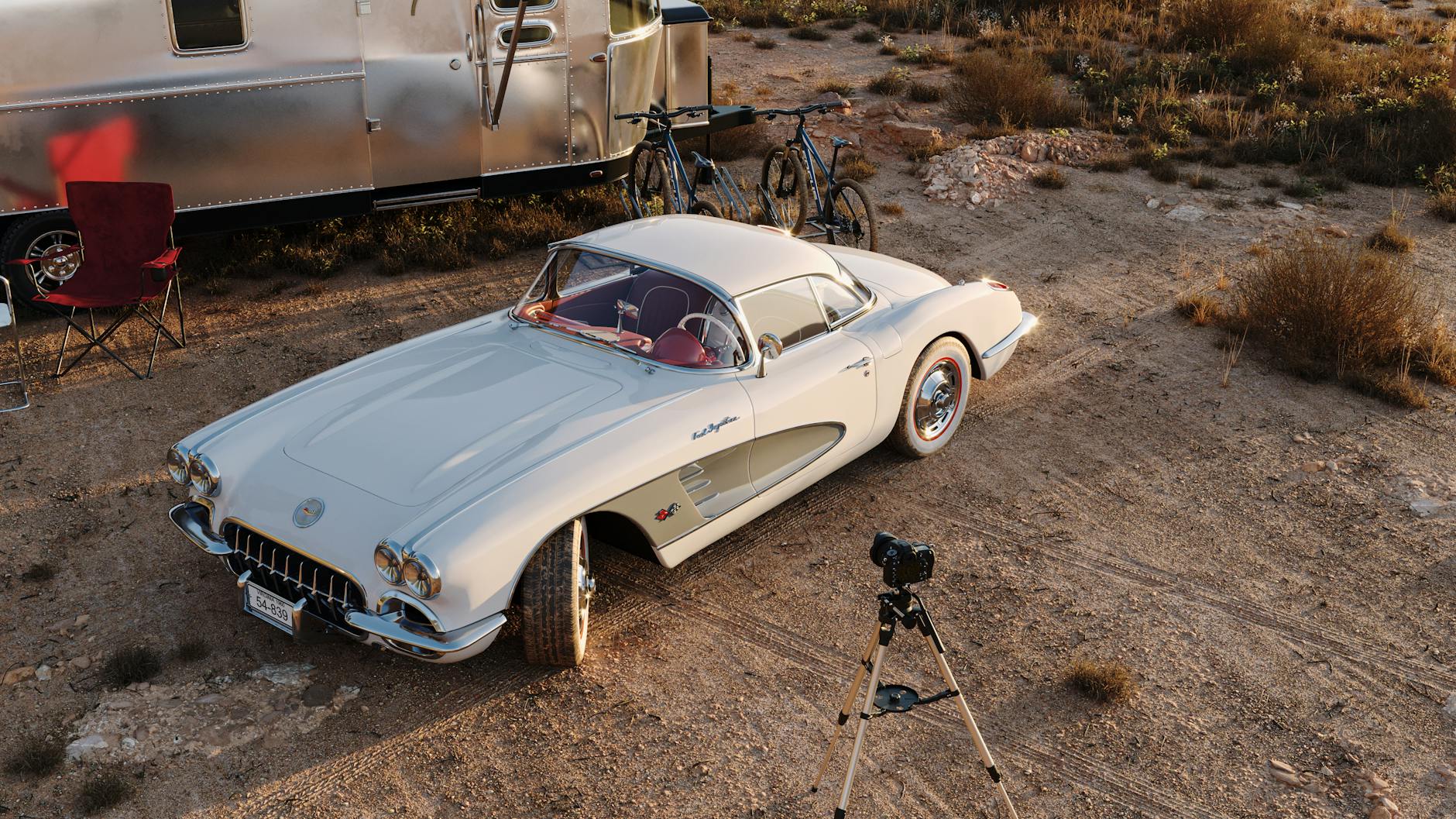
Gas Was 36 Cents a Gallon, But a Cross-Country Drive Was Still an Ordeal. The Hidden Price of the Classic American Road Trip.
There's a version of the 1960s road trip that lives in the American imagination like a postcard: a gleaming Chevrolet, a two-lane blacktop cutting through the desert, the radio humming something good. Gas so cheap it barely registered. Freedom, pure and wide open.
That version isn't exactly wrong. But it leaves out a lot.
Yes, a gallon of regular gasoline cost around 36 cents in 1965. Fill up a full tank and you'd hand over less than five dollars. By that single measure, driving across the United States had never been more affordable. But the full cost of getting from, say, New York to Los Angeles — in money, time, stress, and sheer mechanical uncertainty — told a very different story.
The Car Itself Was the Wildcard
The cars Americans drove in the mid-1960s were large, powerful, and deeply unreliable by modern standards. A typical V8 engine of that era got somewhere between 10 and 15 miles per gallon on the highway, less if you were pushing hard through the Rockies. That meant a 2,800-mile cross-country trip required somewhere around 200 to 250 gallons of fuel — which, at 36 cents a pop, works out to roughly $75 to $90 in gas alone.
Adjusted for inflation, that's around $730 to $880 in today's dollars. Not so cheap after all.
And that's assuming nothing went wrong. In 1965, something almost always went wrong. Tire blowouts were common on long hauls — radial tires were still a novelty, and most Americans were still riding on bias-ply rubber that wore quickly and failed unpredictably. Overheating engines were a routine hazard in desert driving. Breakdowns on stretches of highway with no service station for 60 miles weren't an inconvenience. They were a crisis.
Travelers routinely carried spare fan belts, extra quarts of oil, and basic tools as a matter of course. Knowing how to change a tire wasn't optional knowledge — it was table stakes for anyone planning a long trip.
The Roads Were Getting Better, But Not Fast Enough
The Interstate Highway System was still very much a work in progress in 1965. President Eisenhower had signed the Federal Aid Highway Act back in 1956, but construction was proceeding in fits and starts across the country. Large sections of the modern interstate network simply didn't exist yet, which meant drivers frequently had to detour onto older U.S. routes — two-lane roads through small towns, with stoplights, speed traps, and traffic that could stretch a 500-mile day into a 10-hour slog.
Route 66 was still in active use as a primary corridor between Chicago and Los Angeles, and it was genuinely scenic and genuinely slow. Averaging 300 to 350 miles a day was considered solid progress. A true coast-to-coast trip took the better part of two weeks if you were being reasonable about it.
Motels existed, but quality varied enormously. The major chains — Holiday Inn had launched in 1952, Howard Johnson's was expanding — offered some consistency, but plenty of roadside accommodations were rough around the edges. Travelers without reservations in popular stretches sometimes found themselves driving well past dark looking for a vacancy sign.
What It Actually Cost to Drive America in 1965
If you add it up honestly — gas, oil, meals on the road, two weeks of motel stays, the occasional repair, and the wear on a vehicle that might have 60,000 miles of reliable life in it before a major overhaul — a cross-country road trip in 1965 cost somewhere between $300 and $500 for a couple. In today's money, that's roughly $2,900 to $4,800.
Not extravagant by vacation standards, but not cheap either. And that's before accounting for the time. Two weeks of vacation days was a significant commitment in an era when paid leave was less generous and less protected than it is today.
What Changed, and When
The transformation of the American road trip happened in waves. The interstate system was largely complete by the early 1980s, dramatically cutting travel times and removing the unpredictability of two-lane navigation. Radial tires became standard, and vehicle reliability improved steadily through the 1970s and 1980s as Japanese competition forced American automakers to raise their game.
Fuel efficiency improved significantly after the oil shocks of the 1970s. A modern mid-size sedan gets 35 to 40 miles per gallon on the highway — roughly three times the efficiency of a typical 1965 American car. Even with gas hovering around $3.50 a gallon today, the fuel cost of a cross-country trip in a modern vehicle is surprisingly comparable to 1965 in real terms, while the experience is dramatically more comfortable and predictable.
And then came smartphones. The navigation anxiety that was a constant undercurrent of long-distance driving — the wrong turn in an unfamiliar city, the missed exit, the paper map unfolded on the steering wheel — simply evaporated. Real-time traffic routing, instant searches for gas stations and restaurants, the ability to book a motel room while still 100 miles away: these aren't luxuries. They're a complete reimagining of what it means to be on the road.
The Road Trip Is Still There. It Just Got Quieter.
Americans still love a road trip. Surveys consistently show it as the most popular form of domestic vacation, and the pandemic years saw a genuine resurgence as people traded airports for highways. But the modern version of the experience carries almost none of the underlying tension that made the 1965 version a genuine undertaking.
You don't pack a spare fan belt anymore. You don't study the map the night before. You don't wonder if the car will make it through the Nevada desert in August. The adventure, if you want it, has to come from somewhere else — from the scenery, the detours, the conversations, the places you choose to stop.
The road is still out there. It's just a lot harder to get lost on it.