Sundown Was the Only Rule. The Lost World of the Unsupervised American Kid.
Sundown Was the Only Rule. The Lost World of the Unsupervised American Kid.
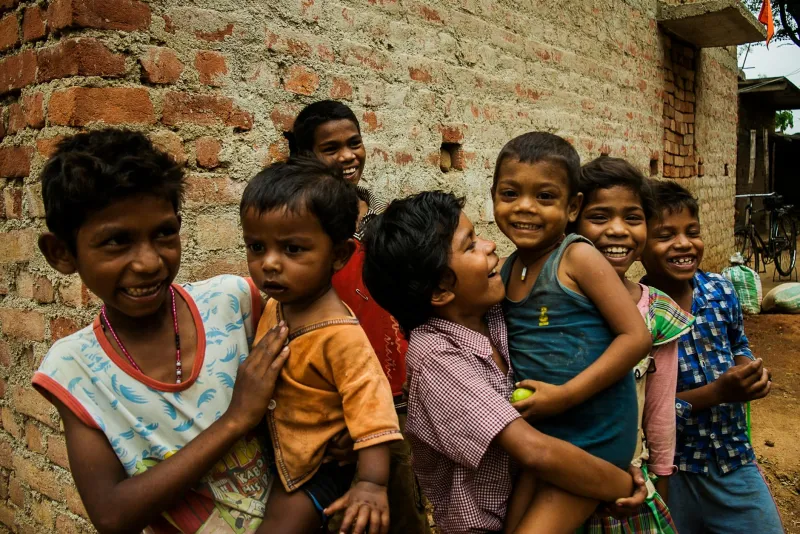
If you grew up in America in the 1970s or early 1980s, you probably remember the drill. Breakfast, then out the door. Maybe a vague destination — the creek, the park, somebody's backyard — maybe no destination at all. Lunch was handled however it got handled. You came home when the streetlights came on, or when your mom's voice carried far enough down the block. That was the deal.
Nobody tracked you. Nobody scheduled you. Nobody worried much, because this was just what childhood looked like.
For a kid growing up today, that description sounds less like a memory and more like an unsupervised wilderness expedition. The shift between those two versions of American childhood is one of the most dramatic cultural changes of the last 50 years — and it happened so gradually that many people don't fully register how total it's been.
What a Normal Day Actually Looked Like
In 1970, the average American child spent a significant portion of their non-school hours outdoors, largely without adult supervision. Neighborhoods functioned as informal ecosystems. Older kids looked out for younger ones. Disputes got settled without referees. Boredom was a problem you solved yourself, which usually meant building something, exploring something, or getting into something you probably shouldn't.
By the mid-1980s, organized youth sports were growing, but the majority of kids still had enormous swaths of unstructured time. A 1981 study found that children had roughly 40 percent more free time than they did by the late 1990s. That's not a small shift. That's a transformation in what a childhood day looks like, hour by hour.
Today, the picture is almost inverted. American children — particularly in suburban and middle-class households — move through heavily structured schedules. School. Afterschool program. Soccer practice. Tutoring. Organized playdates with scheduled start and end times. Evenings on screens, often in shared spaces where parents can monitor what's being watched or played. The unscheduled afternoon has become a rarity rather than a given.
How Did We Get Here?
The easy answer is fear, but that doesn't quite cover it.
The 1970s and 80s did see high-profile child abduction cases that genuinely shocked the country. The disappearance of Etan Patz in 1979 and the murder of Adam Walsh in 1981 were watershed moments — cases that received enormous media attention and reshaped how many parents thought about letting children roam freely. The milk carton campaigns of the mid-80s cemented a sense that danger was everywhere and that unsupervised children were vulnerable children.
But the statistics told a more complicated story. Stranger abductions, while real and devastating in individual cases, were never common. Child safety data from the FBI shows that rates of violent crime against children were actually declining through much of the period when parental anxiety was rising most sharply. The perception of danger outpaced the reality — partly because more information about bad events reached more people faster.
Alongside fear came legal and social pressure. In several documented cases from the 2010s, parents were investigated by child protective services for allowing kids as young as 10 or 11 to walk to a park alone or stay home briefly unsupervised. The informal community tolerance for childhood independence had shifted into something closer to institutional suspicion. What had been a normal Tuesday afternoon in 1978 became, in some jurisdictions, a reason for a welfare check.
Then there was the rise of organized everything. Youth sports became more competitive and more expensive. Extracurricular activities multiplied. College admissions culture — even for very young children — created pressure to fill time productively. An unscheduled kid started to feel like a disadvantaged kid.
What Got Lost in the Trade
Researchers who study child development have spent the last two decades documenting what the shift away from unstructured play has cost. Rates of anxiety and depression among children and adolescents have climbed steadily. The ability to tolerate boredom, resolve peer conflicts without adult intervention, and take manageable physical risks has declined. Some developmental psychologists argue that the unsupervised outdoor childhood was, among other things, a training ground for exactly the resilience and problem-solving skills that employers now say young adults are lacking.
There's also something harder to quantify: the experience of a world that belonged to you. Children who roamed their neighborhoods had a kind of ownership over their environment that scheduled, supervised kids simply don't have. They knew the shortcuts, the hiding spots, the rhythms of the block. That knowledge was a form of confidence.
What Got Gained
It would be dishonest to frame this as pure loss. Children today are, by many measures, physically safer than they were in 1975. Accidental death rates for kids have fallen dramatically. Awareness of abuse has grown, along with systems for addressing it. And some of what looks like over-scheduling is simply parents doing more with less — trying to provide enrichment in contexts where the informal neighborhood networks of earlier decades no longer exist.
The world changed around childhood, and parents adapted. The question is whether the adaptation has now overshot what was actually necessary.
A lot of people who grew up with the creek and the bike and the unaccounted-for afternoon are raising kids today who will never know what that felt like. Whether that's a reasonable response to a changed world, or a quiet loss that will take another generation to fully understand, is a question worth sitting with.