The Butcher Knew Your Name and You Could Afford His Best Cut: When Good Food Was a Working-Class Right
The Neighborhood Economy of Dinner
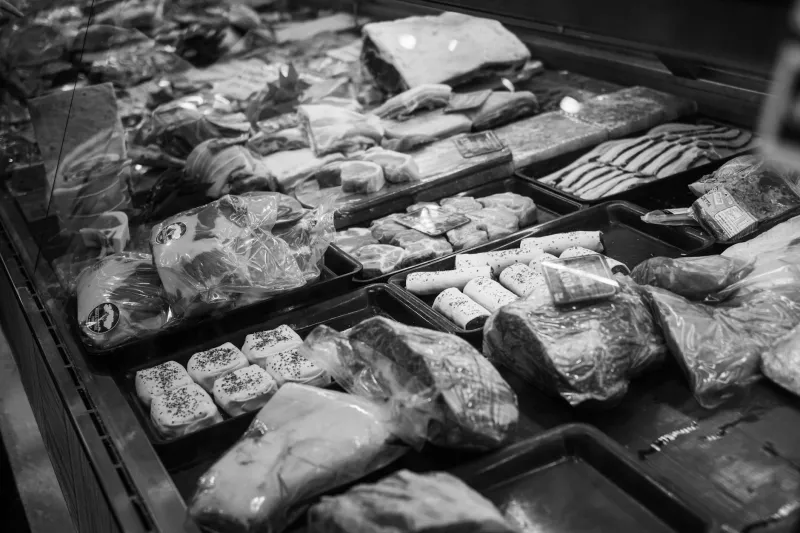
In 1965, Tony Martinez clocked out of his job at the Ford plant in Detroit at 3:30 PM and drove straight to Kowalski's Market. He'd nod to Eddie behind the meat counter, who already knew he wanted two pounds of ground chuck, a whole chicken, and whatever fish looked good that day. The total cost: $3.80, less than an hour's wages from his assembly line job.
Tony would feed his family of five for three days on that purchase. Real meat, fresh vegetables from local farms, and bread baked that morning in the store's own ovens. This wasn't special occasion food or luxury shopping—this was Tuesday.
Today, that same shopping trip would cost around $35, requiring nearly five hours of minimum wage work. And the quality? Eddie's great-nephew now manages a corporate supermarket where the meat travels 1,500 miles before reaching the display case.
When Factory Work Meant Steak Dinners
The postwar boom created something remarkable: a working class that could afford to eat well. A steelworker in Pittsburgh could take his family to a restaurant on Friday night and order whatever they wanted without checking prices. A secretary could stop at the fish market and buy fresh salmon for Sunday dinner.
This wasn't because food was inherently cheaper—it's because wages were higher relative to food costs. In 1970, the average American spent 13.9% of their income on food. Today, it's 9.9%. But that statistic hides a crucial shift: we're spending less because we're eating worse.
The "cheaper" food filling our carts today is heavily processed, loaded with preservatives, and designed for shelf stability rather than nutrition. We've traded quality for convenience and convinced ourselves we're saving money.
The Rise of Food as Class Marker
Somewhere between 1975 and 2000, fresh food became a luxury good. The organic apple costs three times more than the conventional one. The grass-fed beef sits in a separate, more expensive section of the store. The farmer's market, once a working-class institution, now caters to yoga instructors and software developers.
This shift didn't happen by accident. Industrial agriculture prioritized volume and cost-cutting over nutrition and taste. Government subsidies flowed toward corn and soy, making processed foods artificially cheap while fresh produce became relatively expensive.
Meanwhile, wages stagnated. The factory worker who could afford prime rib in 1968 found himself choosing between rent and groceries in 1995. Fast food and frozen dinners weren't convenience choices—they were economic necessities.
The Geography of Empty Calories
Drive through working-class neighborhoods today and count the food options. You'll find plenty of places to buy a $1 cheeseburger, but good luck finding fresh fish or organic vegetables. The corner grocery stores that once anchored these communities have been replaced by convenience stores selling lottery tickets and energy drinks.
This isn't personal failure—it's structural inequality. When you're working two jobs and commuting an hour each way, stopping at three different stores to find fresh ingredients isn't realistic. When a box of mac and cheese costs $1 and a bag of apples costs $5, the choice is made for you.
Food deserts aren't natural phenomena. They're the predictable result of policies that prioritized corporate profits over community health.
What We Lost at the Dinner Table
The decline of accessible, quality food represents more than just nutrition—it's about dignity and choice. When your grandfather bought a roast for Sunday dinner, he wasn't just feeding his family; he was participating in a culture that valued shared meals and quality ingredients.
Families planned their weeks around those Sunday dinners. Kids learned to cook by watching their parents prepare real food from scratch. Neighbors shared recipes and borrowed ingredients. Food was social glue.
Today's dinner table looks different. We eat faster, alone more often, and with less connection to where our food comes from or how it was made. The microwave replaced the stewpot. The drive-through replaced the family meal.
The False Choice
We're told that cheap food is democratic—that industrial agriculture feeds the masses while organic farming serves the elite. But this framing ignores history. For most of the 20th century, Americans ate better food at lower relative costs than we do today.
The choice between affordable and nutritious is a false one, created by policies that subsidize industrial agriculture while ignoring its social and environmental costs. Other developed countries manage to provide access to fresh, local food without breaking family budgets.
The Way Back
Some communities are finding alternatives. Urban farms, community gardens, and food co-ops are bringing fresh food back to neighborhoods that corporate grocers abandoned. These efforts show what's possible when communities prioritize access over profit.
But individual solutions can't fix systemic problems. Real change requires policy shifts: living wages, agricultural subsidies that support diverse crops, and zoning laws that encourage full-service grocery stores in underserved areas.
Your grandfather didn't have to choose between feeding his family well and paying the rent. That shouldn't be a radical aspiration—it should be the baseline expectation in the world's wealthiest country.
Good food used to be a working-class right, not a middle-class privilege. The fact that we've accepted this reversal as normal says more about our priorities than our possibilities.


