When Every American Hummed the Same Song: The Shared Soundtrack We Didn't Know We Were Losing
When Every American Hummed the Same Song: The Shared Soundtrack We Didn't Know We Were Losing
Sometime in the late 1960s, a teenager in rural Mississippi and a secretary in downtown Chicago and a longshoreman in Baltimore were all humming the same thing. Not because they coordinated. Not because an algorithm told them to. Because the radio was on, and the radio played the same songs everywhere.
That was just how music worked in America for most of the twentieth century. And it bound people together in ways we're only beginning to understand now that it's over.
The Dial That United a Nation
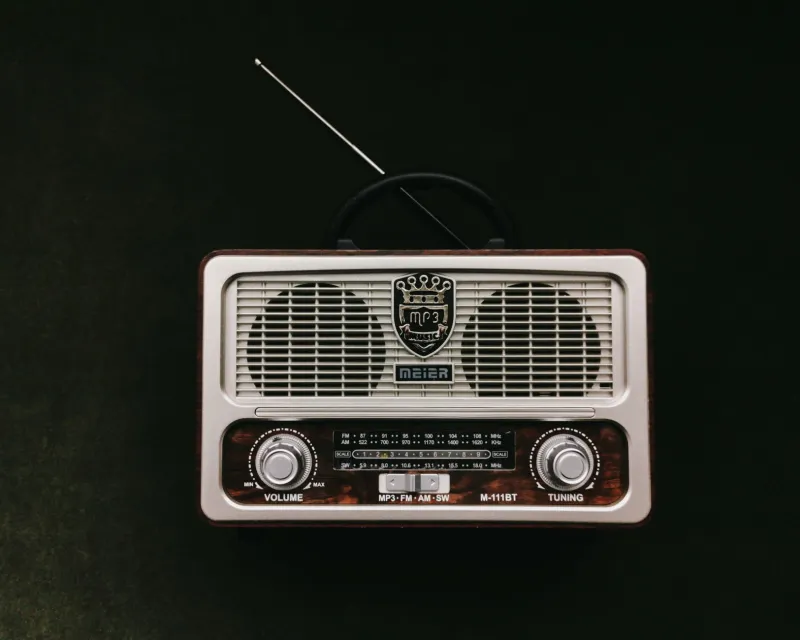
Top 40 AM radio arrived in the mid-1950s and quickly became the dominant force in American popular culture. The format was ruthlessly simple: a rotating playlist of the most popular songs, played on repeat, broadcast to anyone with a receiver. By the early 1960s, transistor radios had made those receivers cheap enough for practically every household — and portable enough to carry to the beach, the ballpark, or the corner store.
The result was something genuinely remarkable. At any given moment, tens of millions of Americans were hearing the same music. A new Beatles single dropped on a Tuesday and by Friday, coast to coast, people were singing it in grocery store aisles without realizing why. You didn't discover music so much as absorb it — through the car radio, the kitchen counter AM/FM, the tinny speaker on your neighbor's back porch.
This wasn't passive consumption. It was cultural synchronization. Shared songs became shared references, shorthand for entire emotional eras. Ask anyone who was alive in 1971 what they remember about that summer and "Maggie May" will come up inside of thirty seconds.
When Hearing a Hit Was an Event
There's something worth sitting with here that the streaming era has made almost impossible to explain to younger listeners: the first time you heard a great new song on the radio, it felt like an event.
You couldn't rewind. You couldn't replay. If you missed the DJ announcing the title, you had to wait and hope he'd say it again. You might spend a week trying to catch it a second time, ear glued to the speaker, before you ever learned who sang it. When you finally did, you told someone. You called your friend. You wrote it in your diary.
That friction — that slight difficulty of access — gave music a weight it simply cannot carry today. Songs were discovered, not delivered. They arrived on their own schedule, and you met them where they were.
The shared nature of it mattered, too. Hearing "Hotel California" for the first time in your car was one experience. Knowing that your coworker, your cousin, and the guy pumping gas next to you had all had that same first-listen moment within the same week — that was something else entirely. It made strangers feel, briefly, like they were living in the same story.
The Great Fragmentation
The fractures started appearing in the 1980s. Cable television brought MTV, which splintered audiences by visual style as much as sound. FM radio proliferated and specialized — classic rock here, country there, adult contemporary somewhere in the middle. The monoculture began to soften at the edges.
Then came the MP3, the iPod, and eventually the smartphone. By the time Spotify launched in the US in 2011, the old model was already a relic. Streaming didn't just change how people listened to music — it fundamentally rewired the relationship between listener and song.
Today, Spotify alone has over 100 million tracks available on demand. Apple Music, Tidal, YouTube Music, Amazon — the combined catalog available to any American with a monthly subscription is essentially the entirety of recorded human music. You can listen to anything, anytime, in any order, forever.
And the algorithms that power these platforms are extraordinarily good at their job. They learn your taste faster than you can articulate it yourself. They serve you music you'll like before you know you like it. They smooth away every rough edge, every unexpected encounter, every song you didn't ask for but might have loved.
In doing so, they've made music consumption more efficient and more isolating in almost equal measure.
Living in Separate Sonic Bubbles
Here's the practical consequence: two people sitting next to each other on a commuter train, both wearing headphones, are almost certainly living inside completely different musical universes. Not just different songs — different genres, different decades, different emotional registers. They share a physical space and nothing else.
This isn't a small thing. Music has always been one of the primary ways human beings signal tribal belonging, establish shared mood, and create the conditions for conversation. When your neighbor's kid is blasting something through earbuds and you have no idea what it is — not the song, not the artist, not even vaguely the genre — a small but real social connection has been severed.
The chart system still exists, technically. Billboard still publishes a Hot 100. But the numbers required to top it have become almost comically modest compared to the era when a Michael Jackson single sold three million copies in a week. Today's biggest hits reach a smaller share of the population than mid-tier hits did in 1975. The idea of a song that virtually everyone in America knows — a genuine cultural consensus — has become nearly impossible.
What Infinite Choice Actually Costs
Nobody is arguing that the old system was better in every way. Gatekeeping was real. Radio programmers had enormous power to make or break artists, and that power was frequently exercised with bias. Entire genres were kept off mainstream playlists for decades. The democratization of music discovery — the ability of a kid in rural Georgia to find underground artists that would never have reached AM radio — is genuinely valuable.
But it's worth being honest about the trade-off. We gained an almost incomprehensible breadth of access. We lost the experience of cultural simultaneity — of millions of people encountering the same thing at the same moment and carrying it into their shared daily life.
The radio dial that once united a nation has been replaced by a hundred million individual channels, each one perfectly tuned to its single listener. We are, musically speaking, more alone than we've ever been — surrounded by more music than any previous generation could have imagined, and less likely to share a single bar of it with the person standing next to us.
Somewhere between the transistor radio and the algorithmic playlist, the shared American soundtrack quietly went silent. Most of us were too busy choosing our next song to notice.


