When Your Word Was Your Contract: The Vanishing Art of the American Handshake Deal
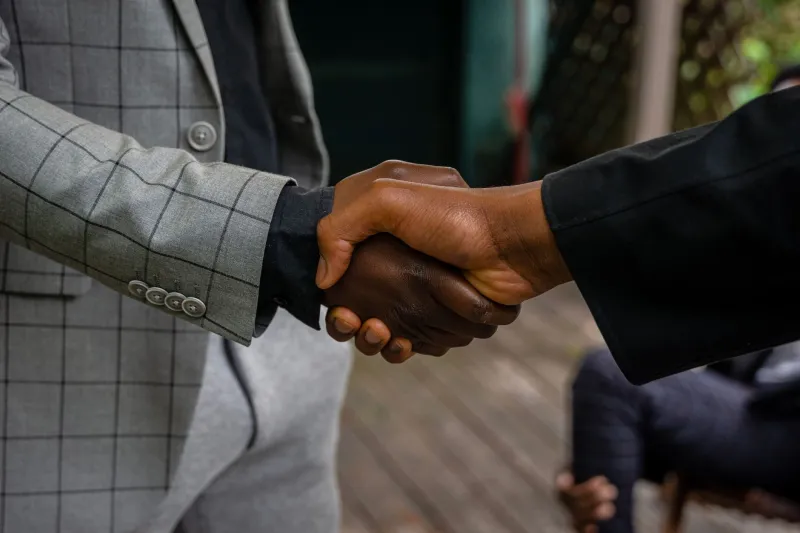
Picture a hardware store in rural Ohio, sometime around 1955. A farmer walks in, tells the owner he needs a new roof put on his barn before winter. The owner knows a local carpenter. He makes a phone call. The carpenter comes by, looks at the barn, names a price, and the two men shake hands. Work starts Monday. No deposit. No written estimate. No liability waiver. No contractor's license pinned to a clipboard. Just two people who knew each other — or knew people who knew each other — and a shared understanding that the deal would be honored because your reputation in a small town was worth more than any legal document.
That world is gone. And most of us didn't notice it leaving.
The Trust Economy Nobody Named
For most of American history, commerce ran on what economists might now call social capital — the invisible currency of reputation, community ties, and mutual accountability. In small-town and even mid-sized city America, business was personal. Your contractor lived three streets over. Your banker went to your church. The man selling you a used truck had coached your son's Little League team. These relationships weren't just pleasant background noise. They were the actual enforcement mechanism that made deals work.
If you cheated someone, everyone found out. If you didn't finish the job, you couldn't show your face at the diner. The community itself was the contract.
This wasn't naive or sentimental. It was functional. Studies of pre-war American commerce consistently show that informal agreements governed the vast majority of everyday business transactions — from land sales between neighbors to seasonal employment arrangements on farms. Lawyers existed, of course, but they were called in for the big stuff: estates, divorces, serious disputes. Hiring one to write up a contract for a kitchen remodel would have struck most Americans as absurdly paranoid, like hiring a bodyguard to walk to the mailbox.
When the Fine Print Arrived
The shift started quietly in the postwar decades. As America urbanized, the old webs of community accountability began to fray. You no longer necessarily knew your contractor's family. The guy selling you a car might be from three counties away. Business moved faster, involved more strangers, and crossed more geographic lines than the handshake economy was built to handle.
Liability law expanded significantly through the 1960s and 1970s, partly in response to genuine consumer protection needs — products were sometimes dangerous, contractors sometimes fraudulent, and ordinary people had little recourse. Consumer protection legislation was real progress. Nobody wants to go back to a world where a company could sell you a defective appliance and shrug.
But something else happened alongside those legitimate protections. The legal infrastructure built to handle genuine disputes gradually became the default operating system for all commerce, no matter how small. Lawyers became standard fixtures in transactions that once required nothing more than a conversation. Contracts multiplied. Clauses bred more clauses. The paperwork didn't just protect people — it started to replace trust entirely.
Thirty Pages to Download a Flashlight App
Today, the average American encounters more legal agreements in a single week than their grandparents signed in a lifetime. Terms of service documents for digital products routinely run to tens of thousands of words. One analysis found that reading every terms-of-service agreement an average American encounters in a year would take roughly 76 full working days. Nobody reads them. Everybody clicks "I Agree." The agreement is theater — legal protection for corporations dressed up as consumer consent.
Offline, it's not much simpler. Hiring a local contractor now typically involves a written estimate, a formal contract, proof of insurance, permit applications, lien waivers, and often a deposit structure tied to project milestones. Some of this is genuinely useful. A lot of it is defensive paperwork generated by an industry of legal professionals whose business model depends on complexity.
Even informal neighborhood arrangements have lawyered up. Want to split the cost of a shared fence with your neighbor? There are legal templates for that. Lending your lawnmower? Some homeowner's insurance policies have clauses covering it. The law hasn't just entered the room — it's rearranged all the furniture.
What We Actually Lost
Here's the thing that gets overlooked in conversations about legal progress: the handshake economy wasn't just efficient. It was connective. Every transaction was also a small act of community maintenance. When you hired a local carpenter on the strength of a neighbor's recommendation, you weren't just getting a roof fixed — you were participating in a web of mutual accountability that held a community together.
The explosion of formal documentation didn't just change how we do business. It quietly communicated something about how we see each other. Every new clause in a contract is, at some level, a declaration that the other party cannot be trusted to do the right thing without being legally compelled to. Multiply that across millions of daily transactions, and you get a society that has institutionalized suspicion.
That's not entirely wrong — strangers in complex markets genuinely do need formal protections. But something real was lost when we stopped being a country where your word meant something and started being a country where your word means nothing until a lawyer has reviewed it.
The Handshake Isn't Completely Dead
It's worth noting that informal trust-based commerce hasn't vanished entirely. Farmers' markets, local service trades, and tight-knit immigrant business communities still operate on versions of the old model. Some industries — construction in rural areas, certain agricultural trades — still run on relationships and reputation more than paperwork.
And there's a reason apps like Nextdoor and local Facebook groups are so popular for finding contractors and tradespeople. People are still trying to recreate the community-accountability system that once made the handshake work. They're just doing it on their phones instead of at the hardware store.
Maybe that's the most telling sign of all. We've spent decades building legal infrastructure to replace trust, and now we're spending billions trying to rebuild trust through technology. We've come a long way from a handshake in a barn doorway — and it's not entirely clear we've come out ahead.


