Calling Your Sister in Another State Used to Mean Watching the Clock. How Long-Distance Phone Calls Once Ruled American Life.
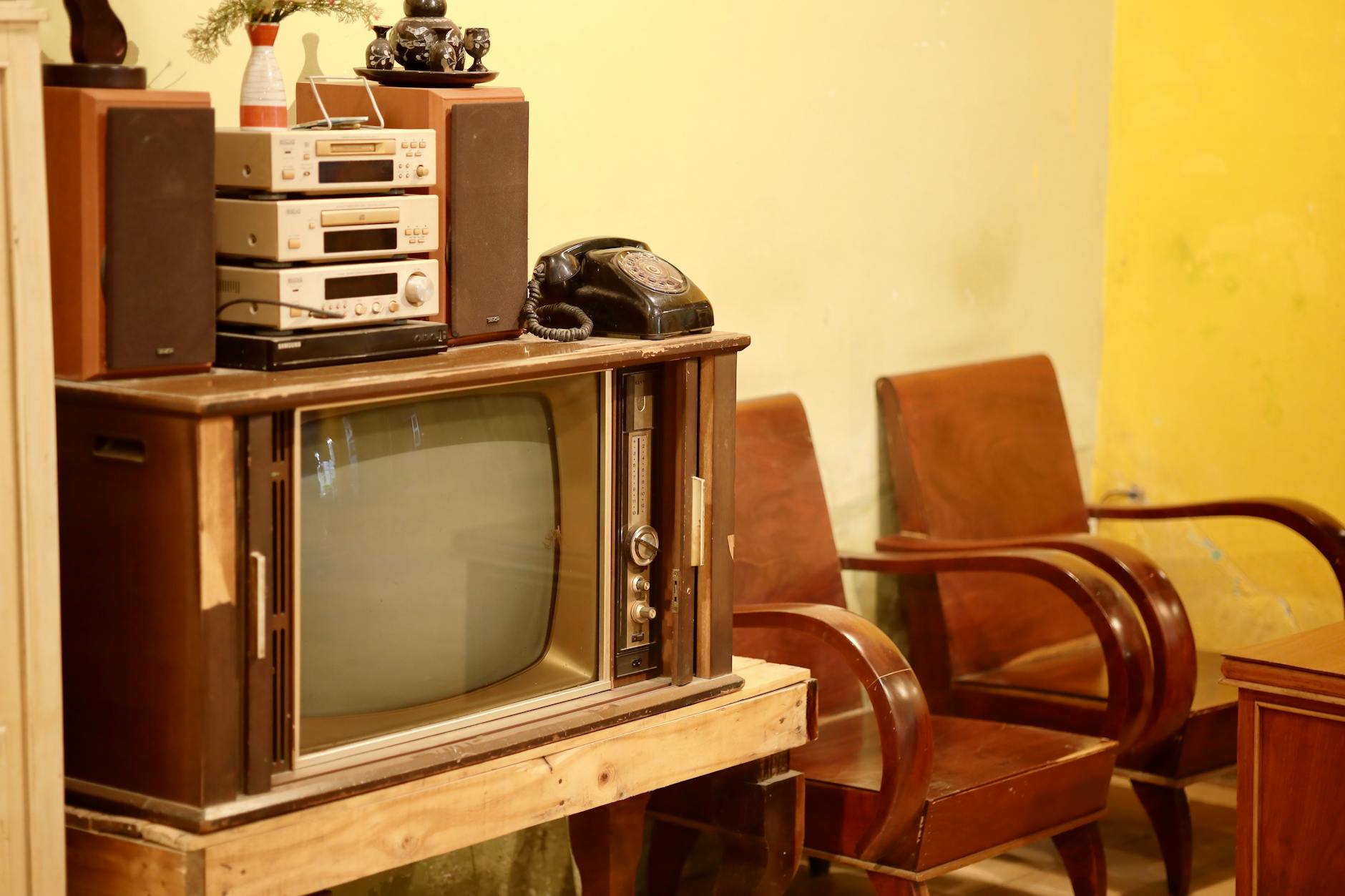
Calling Your Sister in Another State Used to Mean Watching the Clock. How Long-Distance Phone Calls Once Ruled American Life.
There's a particular kind of childhood memory that a lot of Americans over 40 share. Your mother is on the phone, talking to her sister in Ohio or her college friend in California, and at some point she lowers her voice and says, almost urgently: This is long distance. I have to go. The call ends. The conversation, whatever it was, gets finished some other time — or it doesn't.
That experience — the long-distance call as a rationed, slightly anxious event — shaped the way Americans communicated for most of the 20th century. And it's so thoroughly gone now that younger generations can barely imagine it.
What Long Distance Actually Cost
In 1980, AT&T — still the dominant force in American telecommunications before the 1984 breakup — charged roughly 20 to 40 cents per minute for a daytime long-distance call, depending on distance. That might not sound like much until you convert it: 40 cents in 1980 is about $1.50 in today's money. A 20-minute catch-up call with a friend in another state could cost the equivalent of $30 by modern standards.
And that was during peak hours. Rates dropped in the evenings and fell further on weekends — which is exactly why Sunday afternoon became the unofficial national long-distance calling window. Families across the country had an informal understanding that Sunday evening, after 5 p.m. when the rates dropped, was when you called. It was ritualized, scheduled, and slightly ceremonial.
For many households, the monthly phone bill was a genuine financial variable — something that could spike uncomfortably if the kids made too many calls or if an out-of-state family emergency required extended conversations. Bill shock was real, and it trained an entire generation to treat phone calls as something to be used carefully.
The Technology Behind the Cost
The pricing wasn't arbitrary. Long-distance calls in the mid-20th century were genuinely expensive to provide. Calls traveled over physical copper wire networks that required enormous capital investment to build and maintain. Routing a call from Chicago to Los Angeles involved a chain of switching equipment, operators, and physical infrastructure that had to be paid for somehow.
Before direct dialing became standard in the 1950s and 1960s, placing a long-distance call meant going through an operator. You picked up the phone, asked the operator to connect you to a number in another area code, and then waited — sometimes for several minutes — while the call was manually routed. For very long distances or international calls, you might request a specific time for the operator to call you back once a connection had been arranged.
Party lines, common in rural areas well into the 1960s, meant that your phone line was shared with neighbors. Privacy was limited by design. Picking up the receiver sometimes meant finding someone else already mid-conversation. Eavesdropping was possible, if not exactly polite, and everybody knew it.
The Deregulation Decade
The 1984 breakup of AT&T — the result of a decade-long antitrust case brought by the Department of Justice — cracked open the long-distance market to competition. Companies like MCI and Sprint entered aggressively, and a price war began that would last for the better part of 20 years.
By the early 1990s, long-distance rates had fallen substantially from their 1980 peaks, and companies were advertising flat-rate plans — a fixed monthly fee for a set number of long-distance minutes — that began to change the psychology of calling. The clock-watching habit started to ease. Conversations got longer. The Sunday evening ritual became less strictly observed.
Then came the internet, and then mobile phones, and then a cascade of changes that happened so quickly it's hard to track them individually. Email reduced the need for certain kinds of calls. Mobile plans began bundling long-distance as a standard feature rather than an add-on. Voice over IP services — Skype launched in 2003, and its impact was immediate — made computer-to-computer calls effectively free.
By the time most American carriers moved to unlimited nationwide calling plans in the mid-2000s, the concept of long-distance as a separate, more expensive category of call had already become slightly quaint. Today it's essentially meaningless. There is no long distance anymore. There's just calling someone.
What Abundance Changed
The obvious change is the one you'd expect: Americans talk to distant friends and family more easily, more frequently, and with far less planning involved. A spontaneous call to a sibling in another time zone doesn't require anyone to check the clock or calculate the rate. FaceTime, WhatsApp, Zoom, and a dozen other platforms have made video calls a routine part of family life — something that would have seemed extraordinary, almost science-fictional, to someone paying 40 cents a minute in 1980.
But the subtler changes are worth thinking about too. When communication was expensive, people chose their words more deliberately. Letters — which required time and effort but cost only a stamp — carried a weight that reflected the care put into writing them. Long-distance calls, because they were rationed, tended to carry real news: births, deaths, illnesses, visits, significant events. The call meant something was happening.
Communication abundance has changed that calculus. The average American now sends dozens of text messages a day, many of them trivial. That's not a complaint — frictionless connection has genuine value, and the ability to stay loosely but continuously in touch with people you care about has real psychological benefits. Research consistently links strong social connection to better mental and physical health outcomes. The easier it is to stay in touch, the more likely people are to do it.
But something was also lost when distance stopped feeling like distance. The long-distance call, with all its awkward clock-watching, was also a small act of intention. You called because you meant to. You stayed on because the conversation mattered enough to pay for.
The World Got Smaller. The Bill Got Smaller With It.
Long-distance calling in 1980 was a window into how much of daily American life was shaped by the cost of infrastructure that we now take entirely for granted. The Sunday ritual, the operator-assisted connection, the party line, the bill shock — all of it has dissolved so completely that it takes a real effort of imagination to picture it.
Your phone bill today is probably a flat monthly rate that covers unlimited calls anywhere in the country, plus international calls to most major destinations for a few cents a minute or nothing at all. You almost certainly don't think about it when you call someone.
That, more than anything else, is how much things have changed.