She Made the Dress She Was Buried In. The Domestic Skills America Forgot It Ever Had.
She Made the Dress She Was Buried In. The Domestic Skills America Forgot It Ever Had.
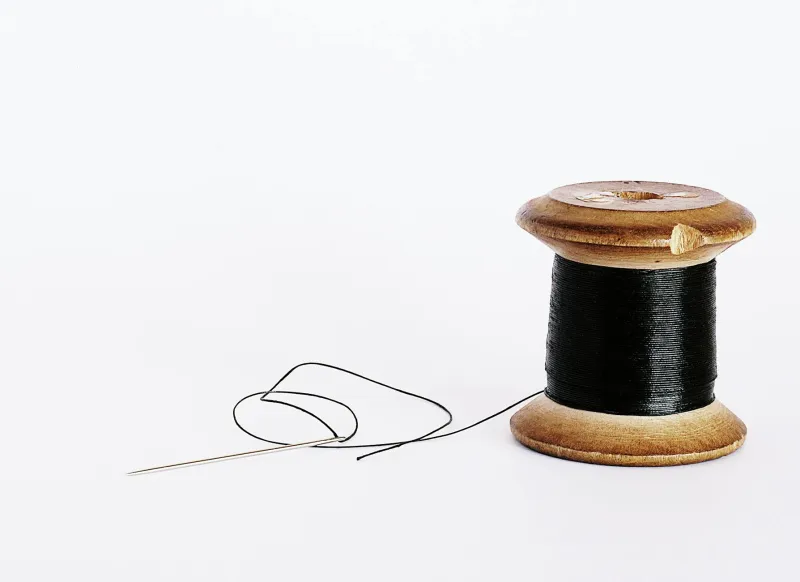
Somewhere in the back of a closet, or packed into a box in a garage, a lot of Americans have inherited something from a grandmother or great-aunt that they don't quite know what to do with: a sewing basket. Heavy metal scissors. Wooden spools of thread in colors that don't match anything they own. Maybe a thimble. Maybe a seam ripper whose purpose they can only guess at.
For the woman who assembled that basket, these weren't hobby supplies. They were tools. Basic equipment for a competency as unremarkable as cooking or driving — something you simply knew how to do because not knowing would have been unusual.
The disappearance of that skill, and dozens like it, is one of the quieter revolutions in American domestic life. It happened fast. It happened for understandable reasons. And it left behind a gap that most households don't notice until something breaks and nobody knows how to fix it.
What the Mid-Century American Household Actually Produced
In the 1940s and 1950s, the average American home was a site of significant production, not just consumption. Women sewed and mended clothing as a matter of routine — the 1948 Singer sewing machine manual assumed a level of skill that would baffle most adults today. Home canning was standard practice in households with any access to a garden; USDA records from the postwar years show millions of American families putting up their own fruits, vegetables, and preserves each fall.
Bread baking happened weekly in many homes, not as an artisanal project but as a basic task. Soap was still made at home in some rural areas. Basic carpentry and home repair were expected of husbands in a way that has largely dissolved. Women knitted, crocheted, and quilted not primarily for pleasure but because these activities produced necessary goods: warm clothing, blankets, household items that cost money to buy and could be made for less.
Children learned these skills by proximity. You watched your mother sew a hem and eventually you sewed one yourself. Your father showed you how to replace a washer in a faucet before you moved out. These weren't formal lessons. They were the ambient curriculum of a household economy that required participation from everyone.
The Machines That Made Skills Feel Optional
The postwar manufacturing boom changed the math of domestic production almost overnight.
By the late 1950s and into the 1960s, mass-produced clothing became genuinely cheap. A factory-made dress cost less than the fabric to sew one at home, once you accounted for time. Canned and frozen foods crowded grocery shelves with a convenience and consistency that home canning couldn't match. Packaged bread — soft, uniform, affordable — made the weekly baking ritual feel like extra work rather than thrift.
For the first time in American history, buying things was cheaper than making them. And so, rationally, people started buying things.
This wasn't laziness or cultural decline. It was a logical response to a changed economic environment. If your hour of labor is worth more spent earning money at a job than spent baking bread, then buying bread is the efficient choice. The market made that calculation for millions of households simultaneously, and domestic production skills began their long retreat.
The Speed of Forgetting
What's striking, in retrospect, is how quickly the knowledge evaporated.
Skills that had been transmitted continuously across generations for centuries essentially skipped a generation in the span of about 20 years. Women who came of age in the 1960s and 70s were the first cohort for whom home sewing was a hobby rather than a necessity. Their daughters, coming of age in the 1980s and 90s, often never learned at all. By the time those granddaughters reached adulthood in the 2000s, the idea of sewing a garment from scratch had become exotic — something people did on YouTube, not in the ordinary flow of a Tuesday evening.
The same pattern played out across skill categories. A 2011 survey found that fewer than 30 percent of American adults knew how to sew on a button with confidence. A 2019 study found that a majority of millennials couldn't perform basic home repairs like unclogging a drain or patching drywall. Home canning has seen a revival in recent years, but primarily as a conscious lifestyle choice rather than a default household practice.
The knowledge didn't just stop being taught. It stopped being seen as something worth teaching.
What the Trade-Off Actually Looked Like
The bargain Americans made was, in many ways, a good one. Time freed from domestic production could be spent on paid work, education, leisure, and relationships. Women who no longer spent Saturdays at the sewing machine had Saturdays for other things. Convenience foods made feeding a family faster and less physically demanding. The modern household runs on far less labor than its 1950s equivalent, and that's not nothing.
But the trade-off had a shadow side that's become more visible over time.
Households that can't repair, grow, preserve, or make anything are entirely dependent on supply chains, retail markets, and service industries for their basic functioning. When those systems hiccup — as they did during the early months of the COVID-19 pandemic — the gap between what people knew how to do and what they needed to do became suddenly apparent. Bread flour sold out nationally, and millions of people who wanted to bake discovered they'd never learned how.
There's also the question of what gets lost when a skill disappears from common knowledge. Sewing is also spatial reasoning and patience. Canning is chemistry and planning. Home repair is problem-solving and physical confidence. These aren't just practical competencies. They're ways of understanding how the material world works — and of knowing, at a basic level, that you can handle it.
Your great-grandmother's sewing basket is still in the closet. The question of whether anyone will ever learn to use it is one the current generation is quietly answering, one IKEA flatpack at a time.