When Neighbors Were Part of Your Extended Family: The Death of the American Block Community

Walk through any suburban neighborhood built in the 1950s, and you'll notice something peculiar: front porches that face the street, driveways that encourage conversation, and sidewalks designed for evening strolls. These weren't architectural accidents—they were the infrastructure of a social world that has almost entirely disappeared.
In postwar America, your neighbors weren't just people who happened to live nearby. They were your emergency contacts, your informal childcare network, and often your closest friends. The idea of not knowing the family next door would have seemed as strange as not knowing your own relatives.
The Geography of Friendship
Consider what a typical summer evening looked like in 1955. As temperatures cooled, families would migrate to their front yards and porches. Children played elaborate games of hide-and-seek that spanned multiple properties. Adults watered lawns, tended gardens, and inevitably struck up conversations across fence lines. These weren't planned social events—they were the natural rhythm of neighborhood life.
The physical design of these communities made isolation nearly impossible. Homes sat close to sidewalks, with large front windows that offered views of street activity. Garages, when they existed, were detached structures at the back of properties. Walking to your car meant passing neighbors, making eye contact, exchanging pleasantries.
Borrowing wasn't just common—it was expected. A cup of sugar, a ladder, jumper cables for a dead battery. These small exchanges created webs of reciprocity that bound communities together. Everyone knew who had the best tools, who could fix a leaky faucet, whose wife made the neighborhood's best apple pie.
The Great Retreat Indoors
Today's suburban landscape tells a different story entirely. Air conditioning eliminated the evening migration to front porches. Attached garages with automatic openers allowed families to disappear from their driveways directly into their homes. Privacy fences replaced the low hedges that once encouraged conversation.
The transformation wasn't sudden—it was death by a thousand small conveniences. Each innovation that made life more comfortable also made it more isolated. Central air meant closed windows and sealed houses. Cable television provided entertainment that didn't require leaving home. Personal computers, and later smartphones, created infinite worlds of connection that somehow left people feeling more alone than ever.
The Numbers Tell the Story
In 1974, Americans reported having an average of three close friends. By 2021, that number had dropped to less than two. More striking: surveys now show that 49% of Americans don't know their neighbors' names, and 26% have never spoken to the people living next door.
The Pew Research Center found that only 26% of Americans know most or all of their neighbors, compared to estimates suggesting that 80% or more knew their immediate neighbors in the 1950s. We've traded the inconvenience of social obligation for the loneliness of perfect privacy.
 Photo: Pew Research Center, via www.logosvgpng.com
What We Lost in Translation
The decline of neighborhood friendship represents more than social nostalgia—it's the collapse of a crucial safety net. When Hurricane Sandy hit the Northeast in 2012, emergency responders repeatedly found elderly residents who had died alone, unknown to neighbors who might have checked on them.
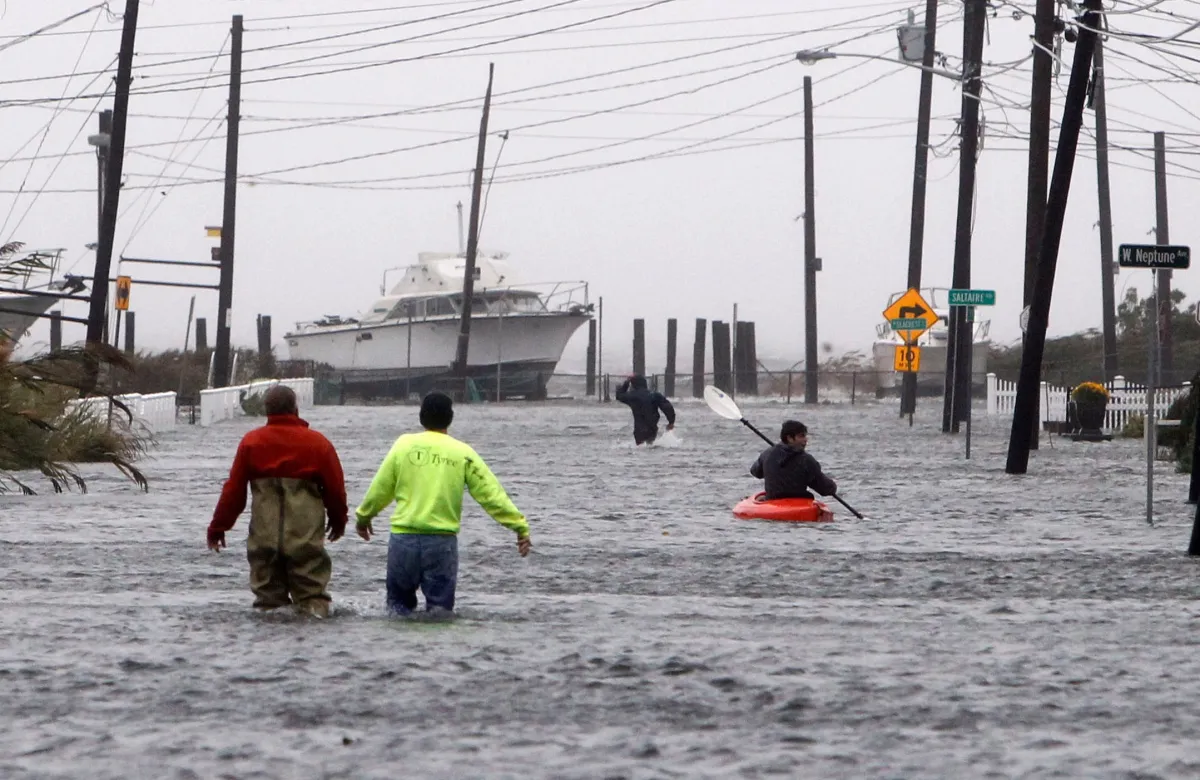 Photo: Hurricane Sandy, via static4.businessinsider.com
Children growing up in the 1950s and 1960s had access to multiple adult role models and authority figures within walking distance. Today's kids are more likely to know their parents' Facebook friends than the family across the street. The village that once helped raise a child has been replaced by scheduled playdates and organized activities.
The economic implications are equally profound. Informal neighborhood networks once provided job leads, business referrals, and shared resources that reduced household expenses. Modern Americans are more likely to hire strangers for services that neighbors once provided freely—dog walking, package receipt, emergency childcare.
The Architecture of Isolation
Modern suburban design actively discourages the casual encounters that build friendships. Cul-de-sacs eliminate foot traffic. McMansions sit far back from streets, creating physical and psychological distance. Community pools and parks exist, but they're destinations that require intentional visits rather than spaces you encounter naturally.
Social media promised to reconnect us, but it's created a paradox: we know more about distant acquaintances' breakfast choices than about our neighbors' daily struggles. We're hyperconnected yet fundamentally alone.
The Price of Perfect Privacy
The American dream of the perfect private castle has been achieved—and it's killing us slowly. Loneliness now carries health risks equivalent to smoking 15 cigarettes daily. Depression and anxiety rates have skyrocketed alongside our retreat into isolation.
Some communities are experimenting with solutions: pocket neighborhoods, intentional communities, and co-housing projects that recreate the social infrastructure of earlier eras. But these remain expensive exceptions rather than affordable norms.
The front porch may be gone, but the human need for connection remains. The question isn't whether we can return to 1955—we can't and probably shouldn't. The question is whether we can design a future that honors both our desire for privacy and our fundamental need for community. Because knowing your neighbors' names isn't just about friendliness—it's about remembering what it means to be human.


