When Sunday Meant Something: The Family Dinner That Held America Together
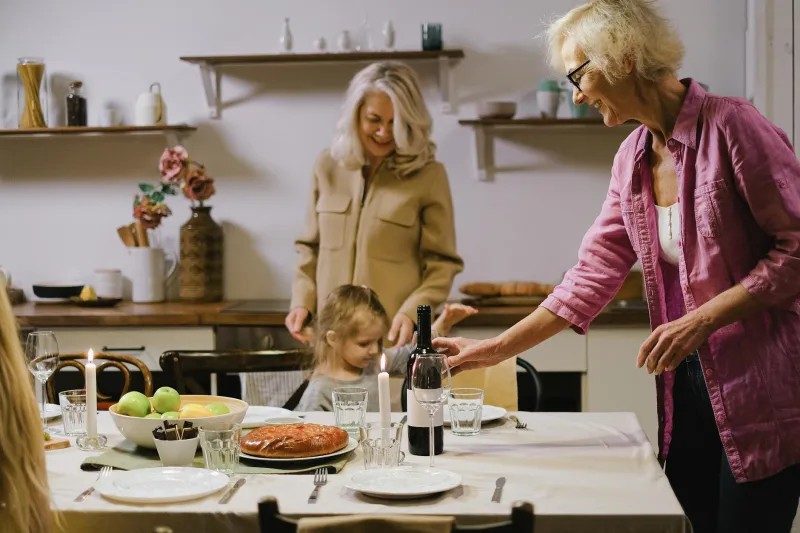
Every Sunday at 2 PM sharp, three generations of the Morrison family gathered around the dining room table in Cleveland. Grandma Morrison had been cooking since dawn—pot roast with carrots and potatoes, green beans from her garden, rolls that filled the house with the smell of home. The good china came out of the cabinet. The lace tablecloth covered the scratched mahogany.
 Photo: Morrison family, via cdn.shopify.com
Nobody asked if you were coming. You came. Work schedules bent around Sunday dinner, not the other way around. Dating someone new? They came too, and survived the gentle interrogation that came with the mashed potatoes. Had a fight with your brother? You sat across from him anyway and passed the gravy.
Sunday dinner wasn't optional. It was gravity.
The Meal That Stopped Time
In an era before 24/7 commerce and weekend work schedules, Sunday held a different weight in American life. Stores closed. Offices emptied. Even gas stations shut their doors. The Sabbath wasn't just religious observance—it was cultural consensus that one day belonged to family.
Sunday dinner anchored that day. Preparation began Saturday night with the setting of the table and the planning of leftovers. Sunday morning meant church for many families, but even secular households honored the rhythm of the weekly feast. By noon, something was roasting, simmering, or baking.
The meal itself lasted hours, not minutes. Children learned patience between courses. Conversations meandered from local gossip to family history to plans for the coming week. Adults lingered over coffee while children played in the yard, always within earshot of the dinner table that remained the day's center of gravity.
The Kitchen That Built Community
Sunday dinner required a different kind of kitchen than today's microwave-and-takeout operations. Grandma Morrison's kitchen was built for serious cooking: a large oven that could hold a roast and three side dishes, counter space for rolling out pie crusts, a pantry stocked with ingredients that required actual preparation.
Women—and it was almost always women—spent their Saturday afternoons shopping for Sunday's meal. The butcher knew your family's preferences. The grocer set aside the best produce for his regular Sunday customers. Cooking wasn't just meal preparation; it was neighborhood choreography.
The meal represented investment—of time, money, and skill. A Sunday roast cost real money when families lived on tight budgets. The cook's reputation rode on whether the rolls were light, the meat was tender, and the pie crust was flaky. This wasn't casual dining; it was performance art with real stakes.
The Table That Taught Life Lessons
Children learned civilization at the Sunday dinner table. Table manners weren't suggestions—they were requirements enforced by the collective gaze of aunts, uncles, and grandparents. You waited for everyone to be served. You asked for things to be passed rather than reaching. You said please and thank you and meant it.
More importantly, you learned to listen to adults talk about adult things. Sunday dinner conversations covered politics, neighborhood news, family finances, and community gossip. Children absorbed the rhythms of civil disagreement, the art of changing subjects when tensions rose, and the skill of finding common ground over shared food.
You also learned family history through stories that emerged over dessert. Uncle Frank's war stories. Grandmother's immigration tales. The family scandals that were whispered about but never fully explained. These stories created context, identity, and belonging that no amount of scheduled "quality time" could replicate.
The Ritual That Bent Reality
Sunday dinner operated by different rules than the rest of the week. Feuding siblings called truces. Busy teenagers showed up and stayed. Adults who worked multiple jobs found time to sit still for three hours.
The meal created a weekly reset that forced families to confront each other as human beings rather than ships passing in hallways. You couldn't avoid your annoying cousin or your opinionated uncle. You had to sit there, pass the potatoes, and find ways to coexist.
This wasn't always pleasant. Family tensions simmered alongside the gravy. Old grudges were served with the vegetables. But the ritual contained these conflicts within a framework of shared obligation and shared nourishment. You might leave angry, but you'd be back next Sunday.
When Food Meant More Than Fuel
Sunday dinner represented abundance in families that knew scarcity the other six days of the week. The good dishes, the extra courses, the dessert that wasn't just fruit—these small luxuries marked Sunday as different, special, worth the extra effort and expense.
The meal also demonstrated competence and care in ways that today's convenience culture has forgotten. A woman who could produce a perfect Sunday dinner was displaying skills that took years to develop: menu planning, timing, seasoning, presentation. The compliments weren't just politeness; they were recognition of genuine accomplishment.
Leftovers extended Sunday's abundance through the week. Monday's pot roast became Tuesday's sandwiches, which became Wednesday's soup. Nothing was wasted, and every subsequent meal carried the memory of Sunday's gathering.
The Slow Collapse of Sacred Time
The death of Sunday dinner didn't happen overnight—it was a gradual erosion that paralleled America's broader transformation from a production economy to a service economy. As retail jobs expanded and the concept of the weekend disappeared, families found themselves scattered across different work schedules.
Sports leagues began scheduling games on Sundays. Malls stayed open. Restaurants discovered the profit potential of the "Sunday brunch" that replaced home cooking with eating out. The day that once belonged to family gradually became another day for commerce.
Women entering the workforce en masse also changed the equation. The person who traditionally orchestrated Sunday dinner was now working outside the home, often on weekends. The elaborate meal preparation that defined the ritual became an impossible burden rather than a cherished responsibility.
What We Gained and Lost
Today's families have more flexibility, more choices, and more individual freedom than the Sunday dinner generations. Children pursue specialized activities that would have been impossible when Sundays were family time. Parents can work weekend shifts that provide economic opportunities their grandparents never had.
We've also gained efficiency. Why spend all day cooking when you can pick up prepared food or meet at a restaurant? Why force family gatherings when people have conflicting schedules and different preferences?
But we've lost something harder to quantify: the weekly reminder that family is worth inconvenience. The regular practice of sitting still together without entertainment or distraction. The shared rhythm that created predictability in unpredictable lives.
The Dinner Table That Still Waits
Some families still gather for Sunday dinner, though it's more likely to be Sunday brunch at a restaurant or a casual afternoon barbecue. The formality is gone—the good china stays in the cabinet, the conversations happen around the kitchen island while people help themselves to buffet-style serving.
These modern gatherings serve some of the same functions as traditional Sunday dinner: family connection, shared meals, regular contact across generations. But they lack the gravitational pull of the old ritual, the non-negotiable quality that made Sunday dinner a fixed point in chaotic lives.
The Morrison dining room table still exists somewhere—probably in an antique store or a younger relative's house, serving as a desk or display surface rather than the weekly altar it once was. The china sits in boxes in someone's basement, too formal for everyday use, too old-fashioned for special occasions that now happen at restaurants.
But the memory lingers: the smell of pot roast, the sound of chairs scraping against hardwood floors, the feeling of being part of something larger than yourself, anchored by nothing more complicated than showing up when called to dinner.
Sunday dinner taught Americans that some things are worth preserving, worth the effort, worth the inconvenience. We're still learning what life looks like without that weekly lesson.


